Health and Safety Policy for Cleaners Waterloo
 Cleaners Waterloo is committed to maintaining a safe, healthy, and respectful working environment for every cleaner, supervisor, and client site occupant. This policy sets out the standards, responsibilities, and practical measures that support safe cleaning operations across all service settings. It applies to routine domestic cleaning, commercial cleaning, specialist tasks, and any work carried out using equipment, detergents, or tools that may present a risk if handled incorrectly.
Our approach is based on prevention, awareness, and consistent application of control measures. We expect all personnel to follow safe working practices, report hazards promptly, and use equipment only for its intended purpose. A well-managed cleaning safety policy helps reduce accidents, protect wellbeing, and ensure that cleaning services remain reliable and professional.
Every cleaner working under the Waterloo cleaning policy must understand that health and safety is a shared responsibility. Managers must provide suitable instruction, cleaners must work carefully and responsibly, and clients must allow safe access to areas requiring attention. Clear communication is essential to reduce risk and to support efficient service delivery.
Risk assessment is at the heart of this policy. Before any task begins, cleaners should identify possible hazards such as wet floors, exposed wires, heavy items, sharp objects, chemicals, or restricted spaces. Where risks cannot be removed immediately, suitable precautions must be taken. This may include restricting access, using warning signs, wearing personal protective equipment, or adjusting the cleaning method.
Health and safety procedures must be followed at all times, particularly when handling chemical products. Detergents, disinfectants, and specialist solutions should be stored securely, labelled correctly, and used according to instructions. Products must never be mixed unless the label confirms it is safe to do so. If a substance causes irritation, discomfort, or accidental exposure, the incident must be recorded and reported without delay.

 Equipment safety is equally important. Mops, vacuums, cloths, ladders, and mechanical tools should be checked before use and kept in good condition. Damaged or faulty equipment must be removed from service immediately. Extension leads and electrical items must be used carefully to prevent trips, shocks, or overheating. In all circumstances, cleaners should maintain attention to detail and avoid rushing tasks that require concentration.
Manual handling is a key concern in the cleaning health policy. Cleaners may need to lift waste bags, move supplies, carry equipment, or reposition light furniture. These actions should be performed using safe lifting techniques, proper posture, and team assistance where needed. If a load is too heavy or awkward, it should be broken down, moved with equipment, or handled by more than one person. Preventing strain is better than treating injury later.
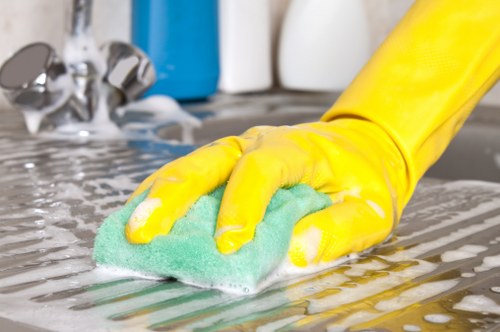
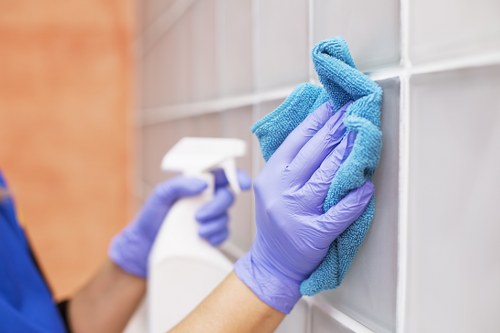
Personal protective equipment plays a vital role in reducing exposure to hazards. Depending on the task, cleaners may require gloves, aprons, face protection, safety footwear, or other appropriate items. PPE must fit correctly, be used properly, and be replaced when worn or damaged. Protection measures are not optional extras; they are an essential part of maintaining a safe workplace for everyone involved.
Hygiene standards are also central to this policy. Hands should be washed regularly, especially after handling waste, chemicals, or contaminated materials. Cuts and grazes should be covered before work begins. Rubbish must be collected and disposed of safely, with special care taken around broken glass, sanitary waste, and other materials that could pose a biological or physical hazard. Maintaining good hygiene protects both cleaners and the people using the premises.
Training and supervision support the effective implementation of all safety requirements. New staff should receive an induction covering hazards, emergency procedures, product use, safe methods of work, and site-specific instructions. Refresher training should be provided when processes change or when additional risks are identified. A strong Waterloo cleaners safety policy depends on staff understanding what is expected and why each control measure matters.
Emergency preparedness is another essential part of safe working. Cleaners must know what to do in the event of fire, chemical spill, injury, power failure, or evacuation. Emergency routes should remain clear, and anyone discovering an incident should take immediate action to protect themselves and others. Where first aid is needed, the incident should be reported as soon as possible and managed according to the relevant procedure.
 Accidents, near misses, and unsafe conditions must always be documented and reviewed. Reporting helps identify trends, improve training, and prevent recurrence. This includes slips, trips, falls, cuts, exposure to substances, faulty equipment, and any behaviour that places a cleaner or client at risk. A culture of reporting supports continuous improvement and demonstrates a clear commitment to workplace wellbeing.
The company also expects professionalism in relation to fatigue, stress, and working conditions. Breaks should be taken when appropriate, workloads should be planned realistically, and workers should not be asked to carry out tasks beyond their competence. Respectful treatment, clear scheduling, and practical support all contribute to a safer and more effective service. Safe cleaners in Waterloo are those who are supported to work with care, not pressure.
Clients and site occupiers are asked to cooperate by keeping work areas reasonably accessible, advising of known hazards, and allowing cleaners to follow safe methods without interruption. Shared responsibility helps prevent incidents and allows cleaning activities to be completed with minimal disruption. When conditions change, the risk assessment should be updated accordingly and work should be adapted if needed.
 This policy will be reviewed regularly to ensure it remains suitable, effective, and aligned with current practice. Health and safety is not a one-time document but an ongoing commitment. By following these standards, Cleaners Waterloo can deliver high-quality cleaning services while protecting the wellbeing of staff, clients, and all other people affected by the work.